From Souvenir Counter to Campus Shop
From souvenir counter to campus shop, see how college stores serve visitors, students, and alumni through practical goods, local design, and online access.
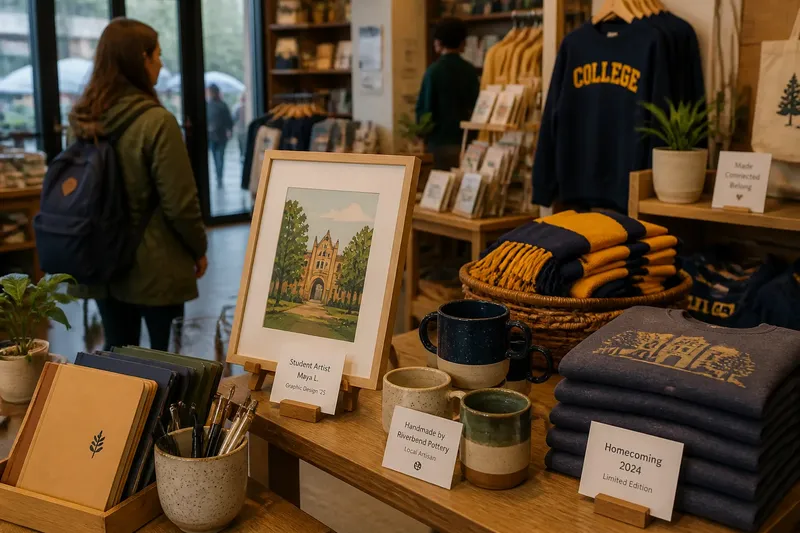
A visitor steps inside a campus shop to escape the rain and finds a display of student-designed prints beside school-color scarves. The shop is more than a stop for visitors: campus shops serve students, employees, alumni, and neighbors with objects tied to the place. Their character comes from what they choose to stock and whose work they make visible.
What makes a campus shop different from a souvenir counter?
A souvenir counter usually focuses on items that recall a visit. A campus shop can do that too, but it may also carry course supplies, locally made goods, event merchandise, and gifts. The difference is not a fixed historical sequence; it is the range of needs a particular store chooses to serve.
That range can make the shop a useful campus landmark. A visitor may browse for a keepsake, while a student stops for a notebook or an employee looks for a department gift. These shoppers share a place, not necessarily a reason to buy.
How can a campus shop show more than the college logo?
College marks are only one part of a campus shop’s visual language. The store can also feature work by local artists, designs connected to a particular department, or objects made for a campus event. Those choices give shoppers ways to recognize the college without every item carrying the same crest.
Placement matters. A student-made print near the entrance is easier to notice than one tucked behind standard merchandise. A shop can use a small display card to name the maker or explain the campus connection, helping shoppers understand what sets the object apart.
Say you manage a shop with a shelf of locally made ceramics and a table of general college gifts. If shoppers often pass the ceramics without noticing their makers, move a few pieces to the table and add clear maker cards. The observable result to look for is whether visitors stop to read the cards or ask about the ceramics; if they do not, try a more visible placement rather than assuming the goods have no appeal.
How should a campus shop choose what to display?
Start with the people who use the space and the reason each group might visit. A shop does not need to represent every campus activity in every display. It can rotate attention among practical supplies, event-related goods, and work by campus or local creators.
- Check the entrance display: If it is dominated by one kind of item, add a different category; otherwise, keep the mix and refresh items that no longer fit the season.
- Check whether prices are clearly marked: If shoppers must ask for basic price information, add visible tags; otherwise, leave the display easy to browse.
- Check whether maker information is present: If a locally made item has no attribution, add a card naming its maker or source; otherwise, retain the existing credit.
- Check whether event merchandise is still timely: If an event has passed, move those items to a clearly marked area or remove them from the main display; otherwise, keep them visible while the event is relevant.
- Check whether useful supplies are easy to find: If shoppers have to search among gifts for notebooks or other basics, group supplies together; otherwise, preserve the current arrangement.
- Check whether the display has room for different design styles: If every item uses a large college mark, add quieter or creator-led options; otherwise, keep the range balanced.
What do shoppers ask about campus shops?
What is the difference between a campus shop and a bookstore?
A campus shop may sell books and supplies, but it can also emphasize gifts, event goods, and locally made items. The names and offerings vary by college, so check the store’s current listing before visiting.
Why do campus shops sell locally made goods?
Locally made goods give a shop a way to represent people and creative work connected to its surroundings. Clear maker information helps shoppers understand that connection.
How can I find out whether a campus shop carries a specific item?
Check the store’s website or contact the shop directly, especially for event merchandise or items with changing availability. An online listing may not show every item on the shelves.
Can an online campus shop replace an in-person visit?
An online shop can help shoppers who live far away or want to check available designs before a visit. An in-person shop offers a chance to see materials and browse displays, so the two options serve different preferences.
How can a shopper read a campus display?
Imagine a visitor has a small budget for a gift and sees a locally made print, a standard college mug, and a seasonal event shirt. They first check the labels for maker details and intended use, then compare the items with the recipient in mind. If the recipient values artwork, the print may be the better fit; if they prefer a practical everyday object, the mug may suit them instead. The decision comes from matching the object to the person, not from assuming one item represents the whole college.
For a quick way to assess a campus shop, look at who is represented, what shoppers can use, and whether each display explains its connection to the college. Those details make the difference between a shelf of generic keepsakes and a shop that reflects the people and work around it.