A First-Year Keepsake Box, Arranged for Easy Browsing
Arrange a first-year keepsake box by occasion, object type, or a light combination, so familiar campus mementos stay easy to browse and simple to add.
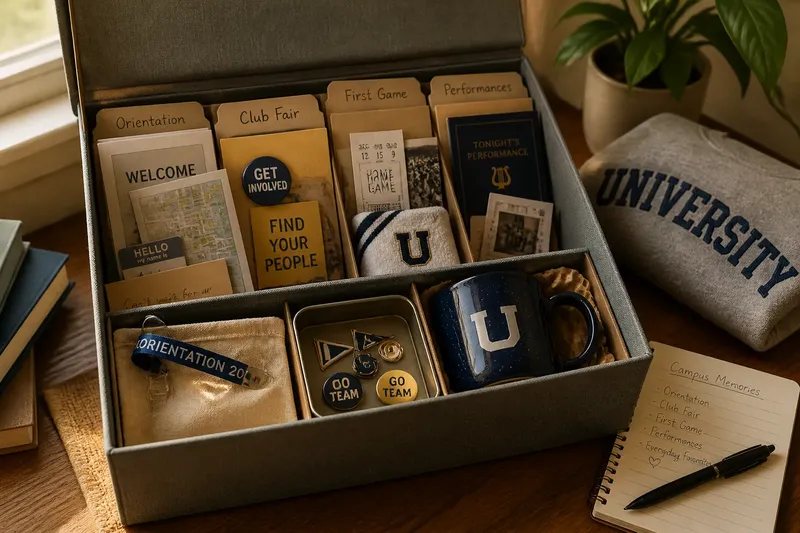
A first-year keepsake box often starts with a wristband from orientation, a campus-shop mug, and a folded program tucked into the same drawer. Arrange those first-year keepsakes with a simple browsing plan, and the box can feel like a collection of moments rather than a catalogue of everything acquired.
There are three useful approaches: group items by occasion, group them by object type, or give occasions the main role while using object type as a gentle backup. Each creates a different kind of browsing experience. Choose the one that makes it easiest to find the memory you want, then leave a little open space for the year still unfolding.
What does occasion-based browsing make easier?
In an occasion-based box, items from the same campus moment sit together. Orientation, the first home game, a club fair, a performance, and move-out can each have a small area or envelope. A ticket, pin, paper program, or shop receipt can share a space because their connection is the event, not their material.
This arrangement suits someone who remembers the year as a sequence of experiences. Opening the orientation section might bring together a name tag, a map, and a note from a roommate. The objects need not match; their shared occasion supplies the order.
Use small paper dividers or envelopes labeled with short occasion names. Keep labels broad enough to accept later additions. “First game” can hold a ticket stub and a rally towel, while a label that names every detail may become awkward when the next item does not quite fit.
The main tradeoff is that an object tied to more than one occasion may be hard to place. A sweatshirt worn to several games could belong in a game section, but it may also be easier to find with other clothing. Pick one home for it rather than making duplicate entries or trying to preserve every possible connection.
When is object-type sorting the better fit?
Object-type sorting groups similar things: paper in one pocket, wearable items in another, and small shop objects in a tray or pouch. This works well for someone who remembers a keepsake by its form. If you are looking for a pin, you can browse the pins without recalling which event gave it meaning.
Give each type a container that suits the item. Use a flat folder for programs and postcards, a soft pouch for small fabric pieces, and a shallow box or divided tray for pins and buttons. Avoid forcing bulky objects into a category just because it is available; the box should close without bending, crushing, or straining its contents.
Object-type sorting can make the story of a particular day less immediate. A program may be far from the ticket that went with it. If the connection matters, place a small handwritten note with one item or use a paper band to keep related pieces together. This adds context without turning the box into a full inventory.
This approach suits a collector who likes browsing by material and wants straightforward places for new objects. It is less helpful if the main pleasure comes from revisiting a sequence of campus occasions.
Could a light combination give the box more flexibility?
A combination keeps occasion as the broad structure and uses object type only where it helps. Set aside a few labeled envelopes or dividers for memorable occasions. Keep everyday objects that do not belong to one clear event in a separate section, such as “campus shop” or “daily favorites.” Within an occasion section, arrange objects loosely by type only if it makes them easier to see.
This is a good fit when some memories are event-centered and others are tied to objects that followed you through the year. It also leaves room for an item that has no obvious occasion. The structure is a set of helpful suggestions, not a demand that every object have a precise address.
Imagine you have an orientation map, a club-fair button, a game ticket, and a mug bought during an ordinary visit to the campus shop. Put the map and button in broad occasion envelopes, give the ticket a place with game keepsakes, and set the mug in the open area for larger everyday objects. When another club button appears, add it to the club-fair section if that is where you would naturally look; otherwise, let the open object area hold it.
The combination works best when its categories stay few and recognizable. If you catch yourself making a new divider for every small variation, step back and merge related labels. The box is for browsing, so a useful broad category is better than an exact but fussy one.
How should you choose an approach?
Ask what you are likely to remember first: the occasion, the object, or a mixture. Then test the choice with a handful of items before settling the whole box. A category that sounds tidy on paper may be hard to use once the objects are in front of you.
- Choose occasion-based browsing if a particular day or campus gathering brings the keepsake to mind.
- Choose object-type sorting if you usually look for a pin, program, garment, or other familiar form.
- Choose the light combination if the box contains both event-specific pieces and everyday campus-shop objects.
- Keep items with a strong personal connection together, even if their materials differ.
- Leave one unfilled area or envelope for new finds, rather than assigning every space in advance.
- Use labels that help you recognize a memory at a glance, not labels that attempt to describe every item.
For paper keepsakes, check that folds are relaxed and edges are not caught under heavier objects. Keep pins and other hard pieces from rubbing against delicate paper by giving them a separate pocket or divider. A box that sits comfortably in a closet or on a shelf is more likely to be opened again than one packed so tightly that browsing becomes a chore.
What questions come up while arranging a keepsake box?
Should I keep receipts with campus-shop keepsakes?
Keep a receipt only if it adds a memory or context you care about, such as identifying where a special item came from. Otherwise, the object can stand on its own, and the paper can be left out.
What if one keepsake belongs to several occasions?
Choose the place you would check first when looking for it. A brief note can point to a related moment, but the box does not need cross-references for every connection.
How much room should I leave for future items?
Leave a visible, easy-to-reach space rather than packing the box to its edges. If that area fills, combine categories or move less meaningful pieces elsewhere instead of pressing new items into a crowded box.
Do labels need dates?
Use dates only when they help distinguish one memory from another. A label such as “club fair” or “first game” may be more useful than a date you do not readily recognize.
How can you keep browsing pleasant as the year continues?
Make additions in small batches. When you bring home a new campus keepsake, decide whether it belongs with an occasion, an object type, or the flexible section. If none of those feels right, leave it aside briefly and choose later; there is no need to invent a category on the spot.
Every so often, open the box and notice which sections invite you to linger and which ones feel difficult to use. Adjust a label, move a divider, or let two categories become one. The first-year keepsake box should reflect how you remember campus life, not impose a filing system that makes the objects feel interchangeable.
For a first-year keepsake box, the clearest arrangement is the one that gives each treasured item a natural place and still welcomes the next one. Keep the structure light, and let a few unfilled inches do useful work: they make room for a memory you cannot name yet.